
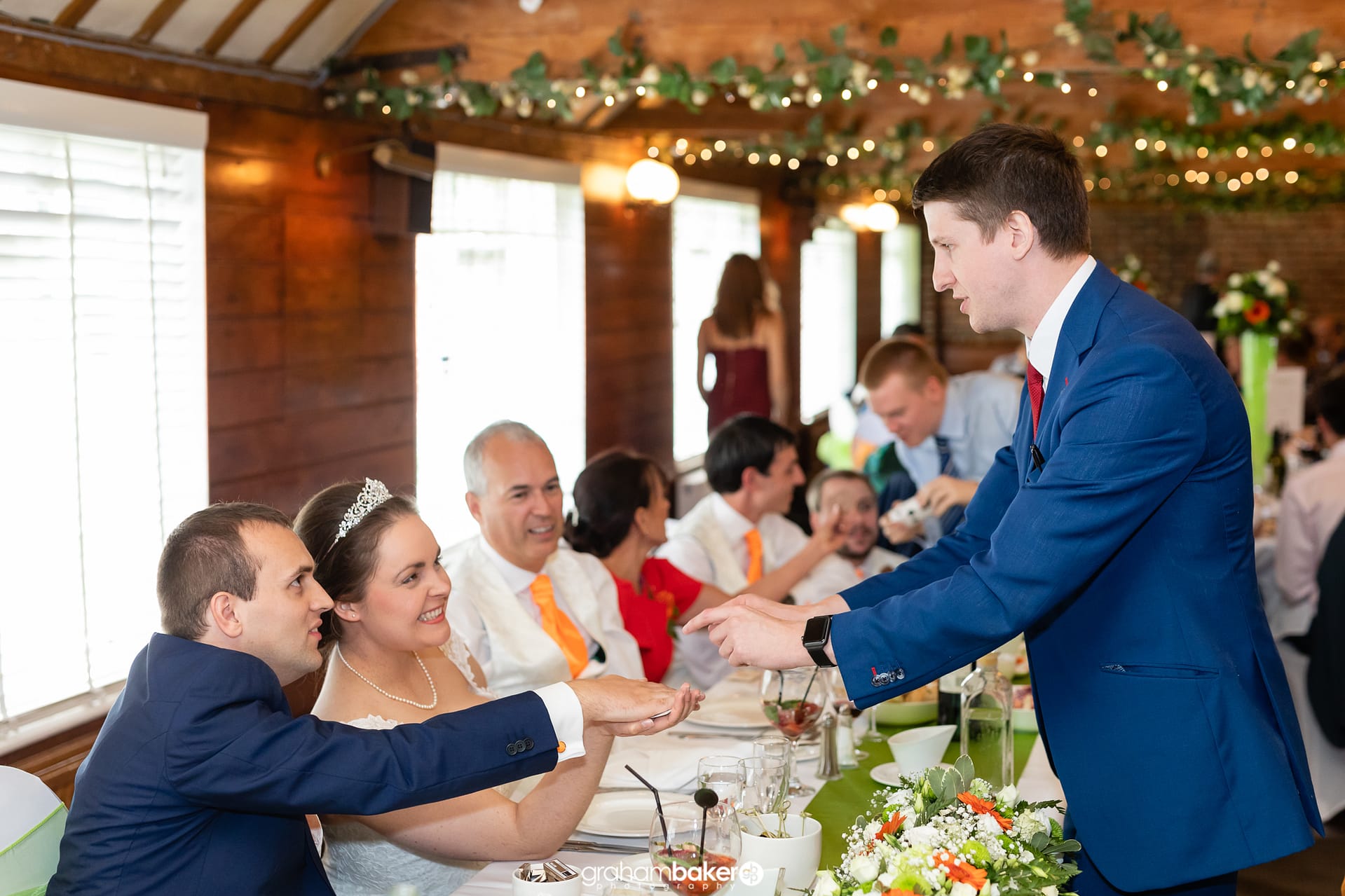
By Pete James, Member of The Magic Circle since 2016 and Associate of the Inner Magic Circle since 2021. Last updated 8 October 2026.
It’s one of the first questions every couple asks, and it’s a fair one. Most wedding suppliers hide their prices behind a contact form, which helps nobody. So here’s a straight answer.
My wedding bookings run from £450 to £1,200. A 45-minute to one-hour set is £450–£600, a two-hour booking is £550-£900, and a four-hour booking across the day is £800-£1,200.
You’ll have noticed those bands overlap. That’s deliberate, and it’s the honest part of the answer: how long you book me for sets the floor, but it doesn’t set the price. A two-hour booking can cost less than a one-hour one. The rest of this page explains why – so you can work out where your own wedding is likely to land before you email anyone.
The Bands
| What you’re booking | Performance time | Price |
|---|---|---|
| Drinks reception, or a single set | 45 minutes – 1 hour | £450 – £600 |
| Drinks reception, or reception + breakfast | 2 hours | £550 – £900 |
| Across the day, into the evening | 4 hours | £800 – £1,200 |
I’m based in Orpington, and there’s no travel surcharge anywhere in London, Kent, Surrey or Berkshire. Further afield – Sussex, Essex, Hertfordshire, Buckinghamshire or beyond – travel is worth asking about rather than assuming, and I’ll quote it separately rather than folding it into a headline price that penalises couples who live nearby.
The Packages Most Couples Book
The bands above are the range. In practice most weddings land on one of a handful of packages, and these are the actual prices.
| Package | Includes | Price |
|---|---|---|
| Wedding Breakfast | 2 hours | £650 |
| Daytime or Evening Reception | 2 hours | £650 |
| Wedding Breakfast and Reception | 4 hours plus an hour waiting | £800 |
| Photography Hour | up to 1 hour | £500 |
| Personalised Magic | add on to any package | plus £150 |
The photography hour is the one couples tend not to think of. While you are off having photographs taken, your guests are standing about with a drink and nobody to talk to. That hour is the easiest hour of the whole day to fill.
Personalised magic is something your guests take home. Engraved keyrings that appear from nowhere in a burst of flame, a playing card signed by both of you with your story written on it, or a solid block of cards engraved with your names and your date. Each one has to be designed and made ahead of the day, which is what the £150 covers, and they tend to be the things still sitting in a drawer years later.
Why the Bands Overlap: What Actually Moves the Price
Seven things genuinely move a quote within, and sometimes across, those bands.
1. On-site hours versus performance hours. This is the one couples find most surprising, and it explains most of the overlap. Two hours of magic split across the drinks reception and the evening reception can mean six hours at your venue, because of the gap in between. Two continuous hours doesn’t. Same performance time, very different day – and the split booking sits at the top of its band while the continuous one sits at the bottom.
2. The date. Saturdays from May to September, and the whole of December, are the busiest dates in the calendar and carry a premium. A Friday or Sunday, or anything from January to March, sits noticeably lower. If your date has any flexibility at all, this is the single easiest saving available to you – bigger than trimming an hour off the booking.
3. Guest numbers and the shape of the room. Not as significant as couples expect, but it matters at the extremes. Covering 180 guests properly takes longer than covering 60. It isn’t only headcount either: a marquee with guests spread across a lawn takes more time to work than one room where everyone’s together. Below roughly 40 guests I can usually reach everyone comfortably in less time, which brings the figure down.
4. Travel and access. Distance is the obvious part. Less obvious is what happens at the other end – central London venues with no parking, loading restrictions or a long walk from the nearest drop-off add time to the day that a country house with a car park doesn’t.
5. What you actually want performed. Roaming close-up magic among your guests is the standard. If you want something added – a short seated piece during the wedding breakfast, or something built around the two of you – that’s more preparation and it shows in the quote.
6. How much notice you give. Not a penalty, just supply. If a peak Saturday is one of the last dates I have left, it prices accordingly. Book early and you’re choosing from a full calendar.
7. What the venue requires. Most venues now ask for public liability insurance, and some ask for PAT certificates or a written risk assessment. I hold all of these and don’t charge for them. But if a venue has genuinely unusual requirements, that can add time.
Two more things move a quote. Where your venue is, which can bring a price down as easily as push it up, and whether your date is one of the handful everybody wants. A Saturday in peak season prices differently from a Thursday in February, and the earlier you ask the more likely I am to still have the date.
What’s Included
Every booking includes:
- Close-up magic tailored to your day, performed among your guests rather than from a stage
- Full public liability insurance – most venues require evidence before they’ll let a supplier work
- PAT-tested equipment and written risk assessments where your venue asks for them
- A planning conversation beforehand, so I know the shape of your day
- Flexibility across the drinks reception, wedding breakfast or evening – whichever part actually needs filling
What Doesn’t Cost Extra
Things couples expect to be charged for and aren’t: travel within my core area, arriving early to set up, staying on when the day overruns by fifteen minutes, or a pre-wedding phone call to talk it all through. None of it appears on an invoice.
If a quote you’ve received elsewhere excludes insurance or travel, you aren’t comparing like with like.
Why a Very Cheap Quote Should Give You Pause
If a quote comes in well below £450, it’s worth asking why. Usually it’s one of three things: no public liability insurance, very little wedding experience specifically, or a performer treating weddings as a sideline around a day job. None of those disqualify someone on their own.
But a wedding is a one-take event. There’s no second attempt if the entertainment doesn’t land, and the saving rarely justifies the risk on the one day you can’t repeat.
How It Compares to Other Wedding Entertainment
For context, a wedding magician generally sits below a live band and around or a little above a good DJ. The difference is when it works. A band or DJ fills the evening. Close-up magic covers the parts of the day that are otherwise dead time – the drinks reception while you’re away having photographs taken, or the lull between the wedding breakfast and the evening guests arriving.
Plenty of couples book both. They solve different problems.
Wedding Magician Prices: Quick Answers
Do you charge for travel?
No travel surcharge anywhere in London, Kent, Surrey or Berkshire. I’m based in Orpington, and for venues further afield I quote travel separately so couples close by aren’t paying for it.
What do most couples actually book?
Two hours, at £650, covering either the wedding breakfast or the daytime or evening reception. The next most popular is the wedding breakfast and reception package: four hours of magic plus an hour waiting, at £800.
What is the lowest-cost way to have a magician?
The Photography Hour at £500: up to an hour of magic while you’re away having photographs taken. A Friday, a Sunday or a date between January and March also sits noticeably lower than a peak Saturday.
How many guests can one magician cover?
One close-up magician comfortably covers up to about 150 guests in two hours. Beyond that, a longer booking makes sure nobody is missed.
Is insurance included in the price?
Yes. Full public liability insurance comes with every booking, along with PAT certificates and a written risk assessment if your venue asks for them, at no extra charge.
How far ahead should we book?
Saturdays from May to September and the whole of December go first, so for those dates it’s worth getting in touch as soon as you have your venue and date. Plenty of couples book a year or more ahead. Quieter dates can often be booked with a few months’ notice.
Getting an Actual Quote
The bands above will get you close. But your wedding has a venue, a date, a guest count and a shape to the day, and those are what turn a range into a number. Send me those details and I’ll come back with a firm price rather than an estimate. No obligation, no follow-up sequence.
Full details of what a booking involves are on the Wedding Magic page. If you’re marrying in a particular area, there are dedicated pages for London, Kent, Surrey, West Sussex and Berkshire – and a barn and rustic venue page if that’s your style of day.